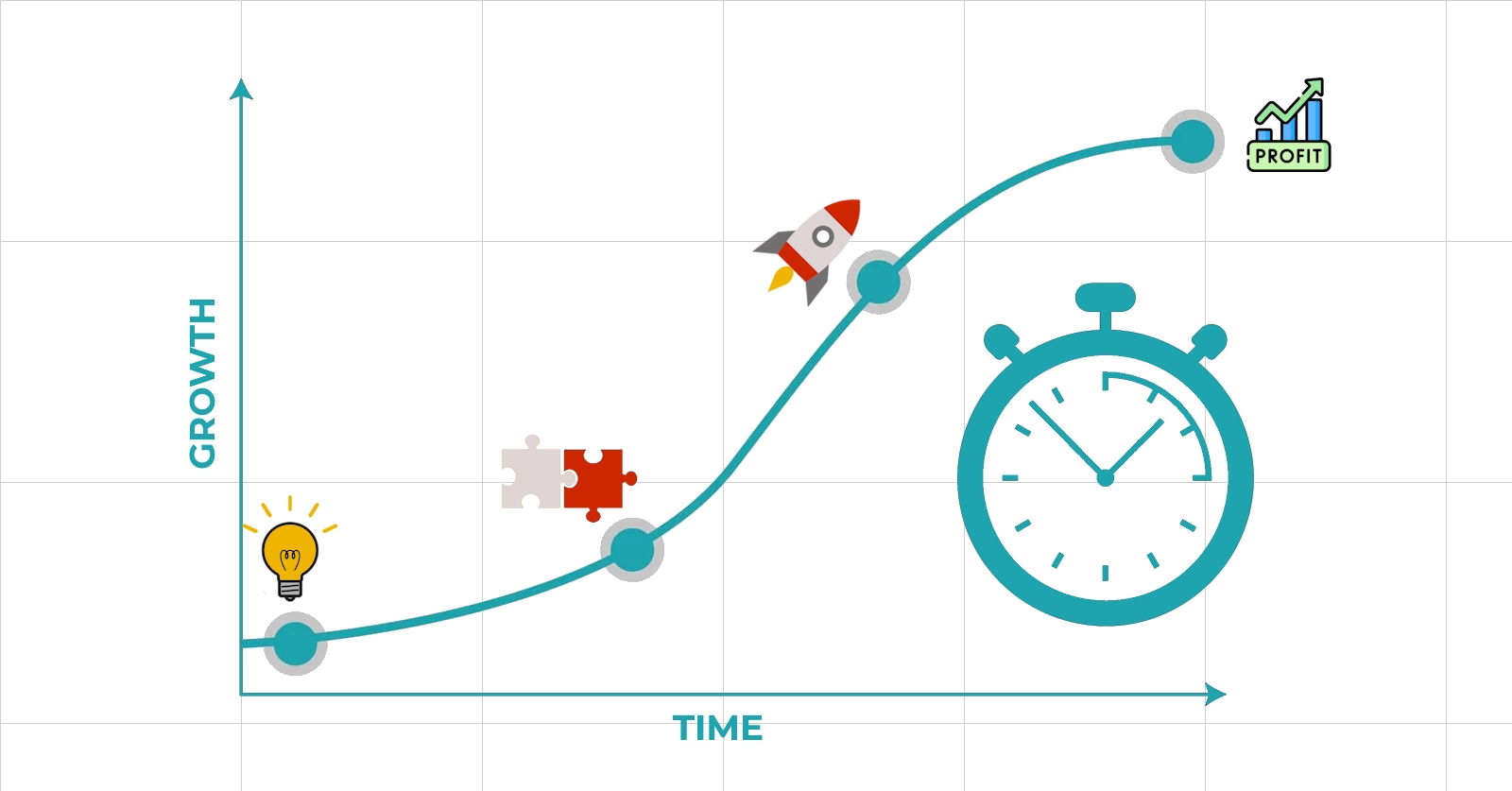

In the high-stakes arena of marketplace startups, there is a pervasive myth that speed is the only metric that matters. Founders often view scaling as a race to plant a flag before the competition arrives. However, pouring high-octane fuel into an engine with a cracked manifold doesn’t make it go faster; it simply makes it explode more spectacularly.
At CobbleWeb, we have witnessed many marketplaces mistake a “spark” of interest for the “fire” of sustainability. Scaling prematurely is a leading cause of startup mortality. The question is not just how to scale, but when. To move from a fragile MVP to a dominant platform, founders must look beyond the initial high of Product-Market Fit (PMF) and interrogate the structural integrity of their business model.
Is Initial Product-Market Fit Enough?
The first mistake many founders make is assuming that initial PMF is a binary yes that stays yes forever. In reality, PMF is a spectrum. You may have found a group of users who love your marketplace solution, but is that fit deep enough to withstand the friction of rapid expansion?
Scaling is rarely about growing everything at once. You must decide what you are scaling: revenue, user count, or profitability? If you scale users without a clear path to profitability, you are simply subsidising your own demise. If you scale revenue without deepening PMF, you risk high churn as you exhaust your early-adopter pool. True readiness for scaling occurs when your PMF has transitioned from “people like this” to “people cannot live without this.”

Don’t Mistake Acquisition for Engagement
There is a deceptive gap between users liking a marketplace and users being tethered to it. We often see platforms fail because they mistook customer acquisition for customer loyalty. A classic example was art marketplace, Affordable Art Fair. While the brand showed immense promise and initial traction, the desire to scale internationally and digitally occurred before the core retention mechanics were solidified.

The lesson is clear: if users are not engaging with and paying for your solution repeatedly, you don’t have a scaling problem; you have a product problem. Scaling an unrefined product is merely a more expensive way to prove that it doesn’t work.
Two Pillars of Marketplace Scalability: Success and Sustainability
Your marketplace is ready to scale only when you have achieved two specific milestones: sufficient customer success (retention) and a sustainable revenue model.
Measuring Customer Success through Leading Indicators
Repeat purchases are the ultimate proof of value, but they are a lagging indicator – by the time you see the data, the user has already decided to stay or leave weeks ago. To scale proactively, you need leading indicators.
Engagement metrics are often the ideal leading indicators to predict future retention. This can be expressed as a general formula: P% of users do X number of an event over Y timeframe. A famous example is Slack, which discovered that once a team sends 2,000 messages per month, they are 93% likely to keep using the software.
For some well-known marketplaces, these metrics might look like:
- Airbnb: A power user could be defined as someone who performs three searches across different dates within a 14-day window.
- Etsy: A leading indicator would be a user favouriting five items from three different sellers within their first week.
- Amazon: For their retail marketplace, it might be the frequency of “Subscribe & Save” clicks or searches that result in a Prime-eligible purchase.
At CobbleWeb, we applied this logic to Mobypark, a platform that helps businesses like hotels and banks rent out unused parking spaces. We didn’t just look at the number of bookings, but paid close attention to the friction in drivers’ searches for open parking space.
We discovered that drivers search for parking space based on popular events, such as music concerts, around transport nodes like airports and in big city centers. Drivers were also sensitive to discounts and information on how to access the car park. In addition, we monitored app speed and errors in forms, transactions, servers, logins,and APIs. These trackers were essential to make sure there were no technical barriers to the renting of a parking space.
By combining robust infrastructure, including Elasticsearch (for lightning-fast data retrieval) and RabbitMQ (which manages complex background tasks) with granular search filters (e.g. nearest or cheapest parking bays), drivers were provided with real-time, highly accurate search results. The search process was further enhanced by a strong user interface link between car park lists and maps, alerts for new parking availability, and a sophisticated messaging system to connect car park owners and drivers.

The result was a five-fold reduction in search failures, which contributed to a four-fold growth in repeat bookings, a 10-fold revenue increase, and a successful acquisition by one of Europe’s largest parking operators.
A Sustainable Revenue Model relies on Unit Economics
How do you know your marketplace has a sustainable revenue model? A common pitfall is focusing on GAAP (Generally Accepted Accounting Principles) profit – the total bottom line – too early. Instead of total profits, which do not reflect scalability, marketplace startups should focus on Unit Economics.
According to Mark Roberge, founding CRO of HubSpot and a senior lecturer at Harvard Business School, startup scaling centers around acquiring users in a profitable manner, aka Go-to-Market (GTM) Fit.
This is defined by the relationship between Customer Lifetime Value (CLV) – the total profit a user generates over their time with you – and Customer Acquisition Cost (CAC). If your payback period (the months required to recover the cost of acquiring a user) is too long, scaling will simply burn through your runway.
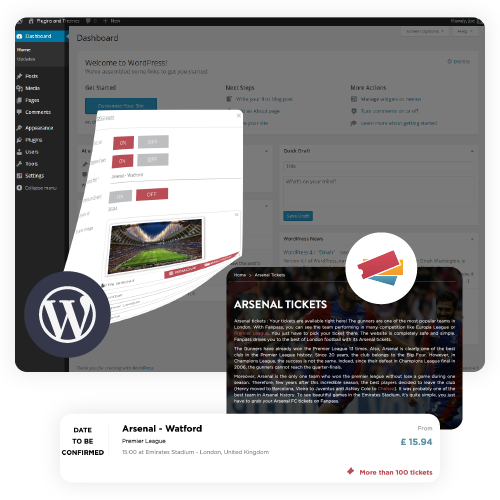
We saw this wisdom play out very successfully with FanPass. Instead of burning cash on expensive ads, they leveraged scalable SEO. By integrating a WordPress CMS with the Symfony PHP framework, they semi-automated the creation of high-ranking event pages. For instance, when a user searched for “Arsenal vs Tottenham,” FanPass was there. This low-cost, high-volume acquisition strategy ensured their unit economics remained healthy as they grew.
Similarly, food delivery app, MealMap drove an incredible 70% adoption rate of premium (paid) features by ensuring that restaurants could see a clear return on investment. Fast, accurate product selection, seamless order flows, super-reliable service delivery, and an innovative revenue model that reduced platform fees for customers contributed to a huge drop in order churn rates and improved customer retention.
Restaurant sign-ups and retention were further grown with affordable, low-maintenance, standalone apps that expanded their digital footprint, while a flexible promotions engine gave them granular control over their marketing budgets. The end result: a phenomenal 77% year-on-year growth on a seven-figure turnover!
Signs of a Scalable Winner
Growth expert Brian Balfour suggests that true scalable winners are those that master the “Engagement Compounding Effect.” High engagement doesn’t just mean more clicks; it creates a defensive moat. Deep engagement generates superior data, which leads to better personalisation, creating Micro Data Network Effects where the product becomes more valuable the more it is used.
“engagement drives the fundamental loops that fuel platform growth: user acquisition, monetization optimization, and competitive differentiation.”
To know if you are ready to be a scalable winner, look for these signals:
- Quality over Quantity: Is your platform attracting users who have the potential to monetise, or are you just an “information depot” where people browse but never buy?
- The UX Balance: Is your marketplace experience more memorable than the channel used to find it? If a user finds you on Google but forgets your name ten minutes later, you have no brand equity.
- The Net Promoter Score (NPS): Would your users be genuinely upset if your platform disappeared tomorrow?
Next steps
Scaling is not an automatic step; it is a strategic phase. Before you pull the trigger, ensure your MVP has transitioned to a high-fidelity product and that you have accurately measured your PMF.
If your retention metrics are stable, your unit economics are profitable, and your infrastructure is ready for the load, you may be ready to scale for sustainable, long-term growth.
Are you ready to build the next category winner? Explore our client journey to see how we guide marketplaces from initial spark to global scale.