

In the early days of the digital gold rush, a marketplace’s success was measured primarily by its ability to aggregate supply. If you had the most vendors, you won. But as the ecommerce landscape matured, the battleground has shifted from mere aggregation to operational orchestration. Building a marketplace today without a sophisticated automation strategy is like trying to manage a modern airline with a paper ledger; you might get off the ground, but you will never reach cruising altitude.
Automation is no longer a luxury reserved for the Amazons of the world. It has become a strategic necessity to attract high-quality sellers, retain discerning buyers, and support the kind of rapid scaling that venture capital demands.
As Bart Verschoor, COO at sales automation platform, ChannelEngine, recently observed:
“Sellers can’t afford to waste two days a week on manual fixes while marketplaces move faster than ever. Automation isn’t optional anymore – it’s essential.”
The Multiplier Effect of Marketplace Automation
The competitive advantage of automation lies in its ability to solve the ‘Supply-Side Trap’. For many marketplace startups, the biggest bottleneck isn’t finding buyers; it’s keeping high-quality sellers from churning. When a platform automates the tedious, administrative aspects of selling, it becomes more indispensable in the eyes of its most valuable partners.
A marketplace that offers automated inventory syncing or AI-driven pricing assistance is fundamentally more attractive to a professional seller than one that requires manual updates via a spreadsheet. This supply-side magnetism creates a virtuous cycle: better tools attract better sellers, better sellers provide better products, and better products draw more buyers. This is how you build a moat that isn’t just about size, but about the quality of the ecosystem.
The Rise of Agentic AI and the API Economy
We are currently moving beyond basic “if-this-then-that” API rules into the era of Agentic AI – artificial intelligence that can execute actions independently.
This shift is accelerating the adoption of third-party integrations and modular ecosystems like Shopify’s marketplace plugins. These tools allow even small marketplaces to offer enterprise-grade functionalities, such as automated tax calculation or international shipping labels, without building them from scratch.
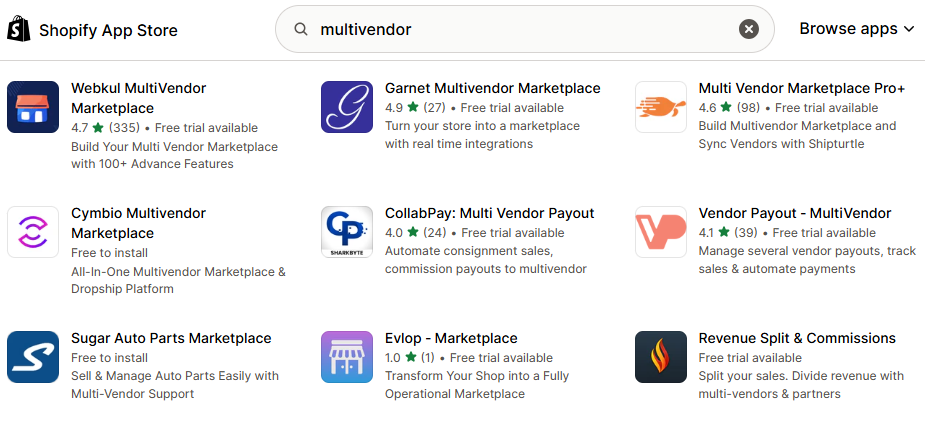
The integration of AI agents allows for hyper-automation, where the platform can interpret unstructured data, such as a seller’s messy PDF invoice, and automatically extract it into a structured product listing. This reduces the time-to-market for new stock from days to minutes. By leveraging these existing technical infrastructures, marketplace founders can focus their engineering efforts on their unique value proposition rather than reinventing the wheel of digital commerce.
Buyer vs Seller Automation
To design a truly efficient platform, one must distinguish between Buyer-Side Automation and Seller-Side Automation.
On the buyer side, the goal is Invisible Friction. This includes personalised recommendations that feel like mind-reading and automated checkout flows that require zero thought.
Case in point: we used Visii to create an intuitive image search feature for art marketplace, Affordable Art Fair. When art aficionados browse visually by clicking on images they like, Visii’s machine learning and custom AI serves them with hyper-personalised search results and recommendations. This cutting-edge technology contributed to a 200% increase in conversion rates.

On the seller side, however, the goal is Operational Sovereignty. Sellers want to feel in control of their business while the “Ghost in the Machine” handles the repetitive tasks.
Seller-Side Automation Examples:
- Automated Listing Tools: Using AI to generate SEO-optimised descriptions from a single product photo.
- Dynamic Pricing: Real-time adjustments based on competitor data and internal demand signals.
- Smart Inventory Management: Predictive alerts that tell a seller to restock before they run out.
- Promotions Management: sophisticated algorithms take care of potential conflicts between multiple conditions.
- IoT automation for rentals: Autogenerated access codes remove the pain of key drop offs.
The Caveat: Do Not Automate a Broken Process
Despite the allure of these high-tech solutions, there is a dangerous pitfall: the copy-and-paste syndrome. Many founders see a successful feature on Airbnb or Etsy and assume it will work for their niche. This often backfires because automation must be surgically aligned with the specific needs of your users.
At CobbleWeb, we advocate for a rigorous Discovery Process. Before a single line of code is written, we map the user journey to identify friction points. If a process is fundamentally flawed, automating it only makes the mistakes happen faster. High-impact automation requires a blend of business empathy and technical expertise to ensure that the solution doesn’t create new hurdles for the very people it was meant to help.
Seller Pain Points are Low-hanging Fruit
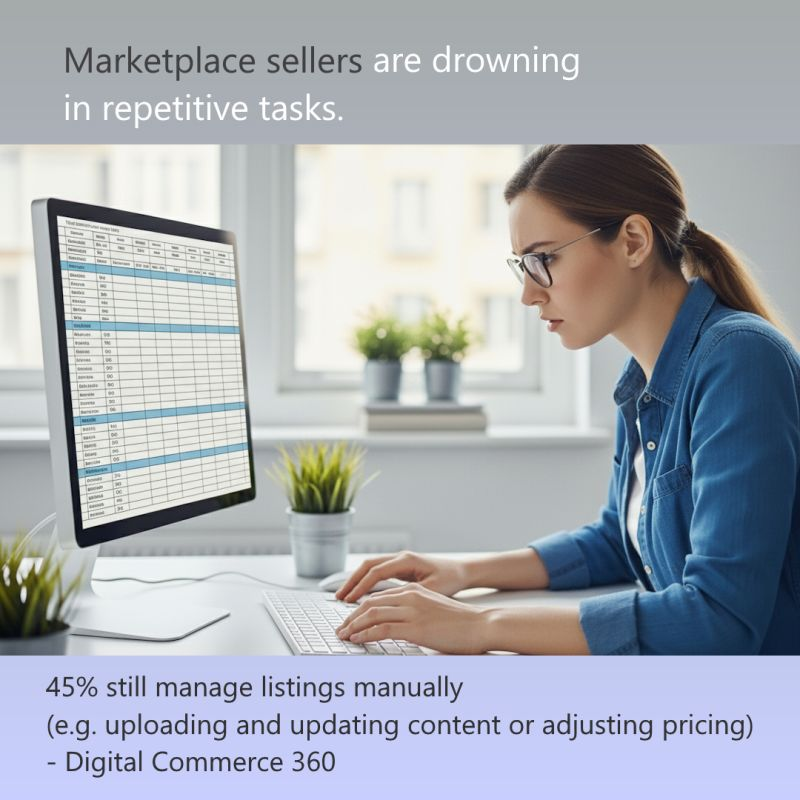
According to a report by Digital Commerce 360 and ChannelEngine, marketplace sellers spend a staggering 36% of their week (nearly two full working days) on repetitive manual updates like fixing listings and handling returns. This constitutes a big opportunity for smart marketplace startups. By tackling these tedious Seller Pain Points, you move beyond mere platform to productivity partner.
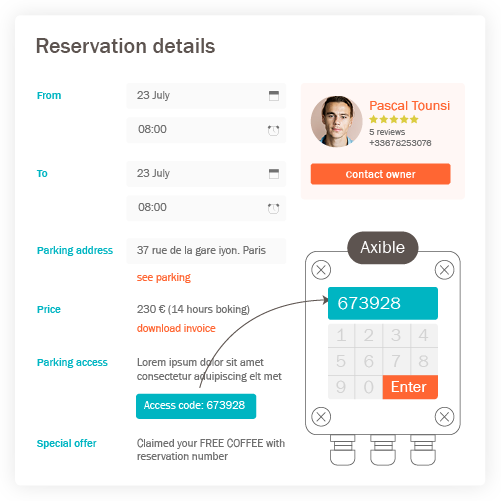
Our work with MobyPark illustrates the power of linking platforms with the physical world via the Internet of Things. We used Axible, an IoT connectivity integrator, to create an access system for hotel park owners. When a customer books a parking slot, a code is auto-generated and shared with them on the app. They then use that code to enter car park access points, removing the need for human handovers. This seamless blend of software and hardware contributed to MobyPark’s acquisition by a major European car park operator.
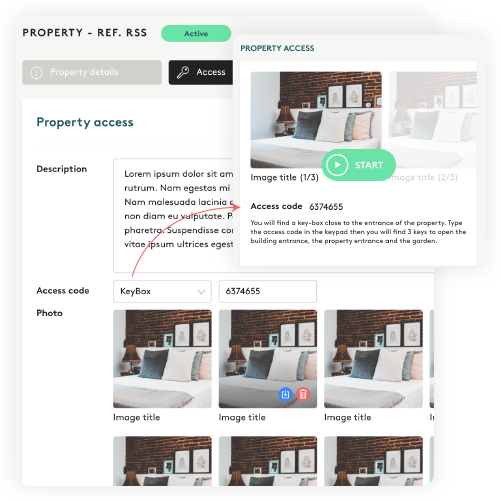
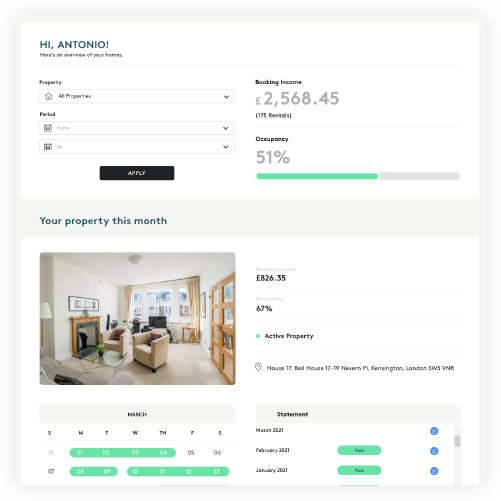
Similarly, in the property management space, we helped Nestify scale into seven countries by automating some boring but critical parts of the business. We integrated IoT tools like KeyBox and KeyNest for property access and built a system that automatically generates complex financial statements. By removing the manual labour from key handovers and VAT calculations, Nestify’s team could focus on expanding their portfolio rather than managing paperwork.
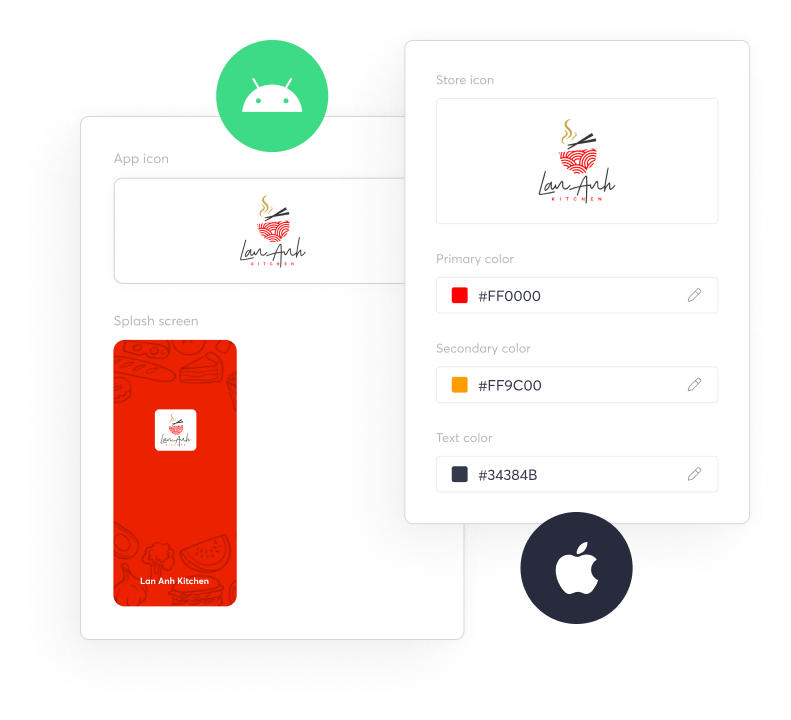
Another client, MealMap, a food order and delivery platform, automated the creation of standalone apps for participating restaurants. Information such as menus, pricing and location are automatically synchronised with the main platform together with each restaurant’s brand assets, such as logos, colours, and imagery. Maintenance is kept to a minimum with automatic upgrades and updates. This helped to drive a 70% premium feature adoption rate among participating restaurants.
Even in high-volume event ticketing, automation is the kingmaker. For FanPass, we implemented dynamic forms that automatically fill in seller details and venue maps. By including a real-time pricing calculator that predicts the likelihood of a sale, we gave sellers the confidence to price competitively, helping the platform become highly profitable within its first twelve months.

Programmatic Engines and the Power of Scalability
Preset, algorithm-powered systems that manage complex logic under the hood, offer a powerful way to provide a faster, more efficient user experience at scale.
MealMap’s flexible promotions engine allows restaurants to stack multiple conditions inside a promotion:
- Percentage or fixed-amount discounts with start and end dates, specific hours, and weekday repeat rules
- Minimum basket thresholds and order type (delivery/collection) limitations
- Customer segment eligibility using buyer attributes, e.g. account creation date or first-order status
- Redemptions can be limited per buyer or by platform-wide totals
- Promotions can be limited to specific products or categories, e.g. main courses only
- Discounts can be paused, deleted, combined with or isolated from promotion groups via simple toggles
Promotions are either automatically applied at checkout or customers can provide a manual discount code. Each discount is clearly associated with a line item at checkout with eligibility notes or failure reasons. Loyalty rewards that mirror discount rules for timing, order type, and product range can be triggered automatically after a set number of orders or amount spent.
This is possible due to the sophisticated technical architecture that runs in the background:
- A normalised schema captures conditions for time slots, basket items, customer type, and catalogue. The promotion engine evaluates these rules deterministically at quote time for speed and consistency.
- Pricing recalculates at key events (e.g. item addition) which keeps the UI accurate without page reloads.
- Idempotency – discounts or loyalty rewards are applied once per qualifying context, with audit trails that simplify reconciliation
- Lightweight predicates and indexed lookups keep evaluation fast at scale, even during peak hours
MealMap also automated aspects of the food delivery process via a dynamic delivery engine.
- Circular delivery zones at any point on the map, which account for geographical constraints like one-way traffic, ensure that fees and ETAs reflect actual drive times. When multiple zones overlap the system automatically selects the lowest fee.
- A delivery calculator allows customers to check eligibility, fee, and ETA before they order. Fees, minimum order thresholds, and time estimates are tied to zone rules and update instantly when a customer edits their address or a restaurant changes its parameters.
- Pinpoint deliveries are supported by accurate geocoding via Google Location API and customer delivery instructions like gate codes.
- An interactive list and map that show zone ranges, delivery statuses, fees, and ETAs can be controlled from a single screen.
Aforementioned property rental platform, Nestify, optimised landlord yields via a dynamic pricing engine that determines the best price points for rental properties by considering variables like property location, seasonality, and specific features such as the number of bathrooms. In the same vein, we built a pricing algorithm for Mobypark that factors in variables like location and demand to optimise pricing for car park owners.
Building for the Future
Automation can be the bridge between a startup that is merely getting by and a marketplace that is a scalable winner. It is the difference between a team that is drowning in spreadsheets and a team that is innovating on the next phase of growth. As you plan your roadmap, remember that every hour you save your seller is an hour they can spend growing your marketplace.
🕵️♂️ Get in touch for a Marketplace Automation Audit to identify which features will yield the highest ROI.